A few years ago a family in our church lost their much-loved son to untimely death. To comfort them I created a story to help them see the difficulties of his life are now forever forgotten. I hope you enjoy the story.

Bittersweet Farm
A few years ago a family in our church lost their much-loved son to untimely death. To comfort them I created a story to help them see the difficulties of his life are now forever forgotten. I hope you enjoy the story.
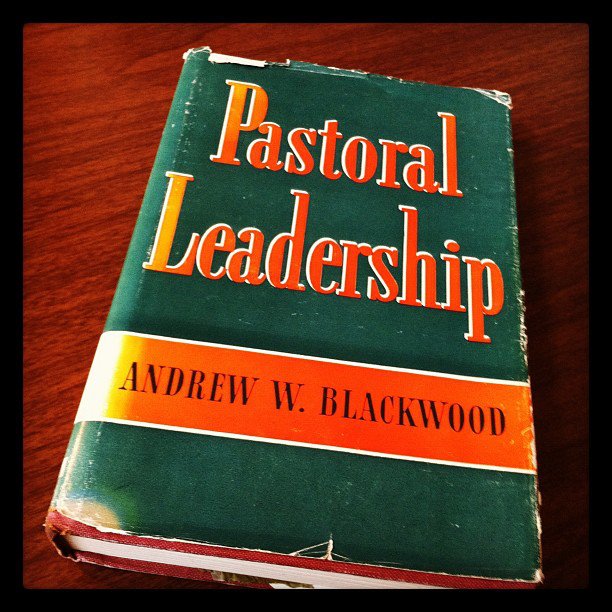
Puttering around among my books I spot and old book of pastoral theology passed down to me from my grandpa’s modest library. I take it in hand and turn it over a few times, enjoying the weight of it. Something about it tugs on my memory. I open it. Suddenly it comes back to me why this is a very special book.
Grandpa had great eyesight. He always said that when he was in the Navy he was tested and told he had rare 20/10 vision. (I guess that’s twice as good as normal vision). This may have been one of the things that made grandpa a skilled hunter. He was a keen observer of nature. I’m sure the eyesight was especially helpful.
We were on the tractor chugging up the lane aimed at the gate to the field on top of the North hill one mid-summer day when, without speaking, he stopped the tractor and pointed toward the ground.
“Theres’s four-leaf clover right over there. Those are pretty rare why don’t you jump off and pick that.”
I strained eyes. I couldn’t see it. “Where, grandpa?”
“You can’t see it there? It’s about two feet out to the right of the front tire.”
I couldn’t see it.
I noticed the wide blue sky. I saw the wispy white clouds and the colorful birds that occupied the wide blue sky. I noticed the silvery ripples in the pond in the morning breeze and the glassy surface of an evening calm. I stood in quiet mediation watching how the slanting light of the sun reflected on the water in the deepening dusk. I saw the insects that skittered on the surface of the water in the evening and the circles in the water where the bass would rise as darkness was coming on.
I noticed the graceful way the Maple leaves waved in the wind. I noticed how the leaves of the Maples were minty green in early spring, a light pastel, how they would turn to a rich dark green in summer and then in the shorter days of September begin to blush with color until they displayed their full dying glory against the deep blue October sky. I noticed how by mid-November the wind would blow the Maples bare to leave a stark pencil sketch where the month before there had been a beautiful water-color of a tree.
I noticed the feathery tassels over the corn growing in artful bands on the hillsides and the green pasture growing between the bands of corn. The symmetry-the artistry of a well-groomed hill farm draws my attention to this day-how the crops lay like a mantle on the shoulders of the hills.
I noticed the country noises and the absence of suburban sounds. There was not a highway within miles. The nearest paved road was miles away–Martinsburg Road and that was a lightly-travelled undulating, curving, scenic farm road.
The farm was bisected by a gravel road. There we only a few farms on the road. The mail truck would pass once a day. Only a few cars a day passed the farm. If you were within site of the road when a car passed it would be a great social affront not to raise your head and wave your hat or hand in greeting. The locals would consider you odd and anti-social the talk at the coffee shop would go like this; “You know I was out passed the Kaylors the this morning. I don’t know what’s gotten into him. He didn’t even look up.”
You could hear the tires on the gravel and unless there had been a rain within a few days a plume of dust would rise and fall after the car. Once the noise of the passing car or truck fell away the country sounds would be amplified in the quiet.
I noticed the lazy grazing of the cows and how they would always cluster together. I noticed how the cows would graze over to the fence-line in the east and eat away the low-hanging branches leaving a neatly-groomed appearance. For the rest of my life I would notice when livestock or deer would trim the trees and leave the forrest with a park-like grooming along the edge of the wood.
I noticed the pasture in spring green as Ireland. I noticed the bleached white of the limestone in lane and in the two-tracks over the hills. I noticed the blue and purple paint of the hills rolling off into the distance and the cloud of condensation left by a jet thousands of feet overhead silently streaking white across the sky.
I noticed the smell of the barn, a wonderful mix of manure, hay, grease, faint exhaust from the tractor, molassas in the feed, and ancient timber aged by moisture and sun and years. The barn on a working farm has a fragrance, a beautiful perfume you could only appreciate if you cherished a few summers in the country.
I noticed a lot if things, but grandpa had a way of pointing out things I overlooked.
I let go of the fender and jumped down from the draw-bar where I was standing and walked over in the direction of where he was pointing and tried to search every inch of the ground. He throttled-back the engine, took the tractor out of gear, set the brakes, let out the clutch, slowly got off, walked over, bent down and picked a four-leaf clover. I watched him do this more than once. He held the clover up for me to see and then put it in the pocket of his chore coat.
At first I thought it was a prank. I thought he had a four-leaf clover in his pocket and he would do a little slight-of-hand when he bent over the “pick” the four-leaf clover. I expressed my doubts so the next time he made me look at the clover and confirm it and pick it myself and hand it to him.
When we returned to the house he would walk over and pick a thick book of pastoral theology, a hard cover book with a green dust-jacket, and he would open the book and press the clover between it’s pages. The book was called Pastoral Leadership, by Andrew Blackwood.
I’ve had my meetings and closed out my tasks for the day. The phone is silent. The others have gone for the day. I prepare to turn off the lights and go home for supper. The church is quiet.
In the solitude of my study I sit among my books for a few minutes hold this old book in my hands. How long has it been? I calculate the years that have passed. It’s been 40 years since we found some of the clover pressed between these pages. The memory draws my heart back to the summers of my youth. I begin to slowly fan it’s pages. I’m in no hurry. There are ten or twelve places I find with four-leaf clovers pressed between the pages.
For the first time ever I begin to carefully turn every page of the book to see if there was anything I have overlooked in the years my grandfather’s book sat on my shelf. I find an annotation. It is my Dad’s careful printing. This book had belonged to my Dad. He had given it to grandpa and then Dad gave it to me after grandpa’s death knowing the significance it would hold.
Inside the last few pages is something I have never seen before, a number of four-leaf clovers in a cluster, maybe twelve or fourteen of them.
Grandpa would die within ten years of the afternoon we pressed the clover. A quarter of a century later we would bury grandma next to him in the old Wilson Cemetery. I would meet and marry Lois and serve pastorates in Ohio and Michigan. Our eight children would be born and all that busy time this book would sit silently on my self unnoticed. Years would come and go.
This afternoon, enjoying the quiet luxury of my study I hold the old book in my hands and I feel a connection across the states and the decades to the little farm in the hills of Ohio and and a rare mid-summer afternoon.
I have my grandpa’s last Old Schofield Reference Bible. It is stamped REV K D PIERPONT in gold foil. I have the set of Ellicot’s Commentaries that belonged to him and I have the book on Pastoral Leadership by Andrew Blackwood. Between it’s pages are little plants of green that one day grew out of the soil that lay on the hills of the old farm. Few other physical things remain. I put the book carefully back in it’s place. I turn off the lights and start for home with a thoughtful heart.
Hear me tell this old chestnut of a story by clicking here: Of Trees and Truthfulness
This story is an old chestnut I have been telling for years. It is a rare story. A man only gets a few stories like this to tell in his lifetime. I first wrote it about twelve years ago. (2-18-2012)
It had been years since I had seen my grandfather’s old farm. It was sold about fifteen years ago. When we moved into the area and I wanted my wife and children to see the place that had meant so much to me growing up.
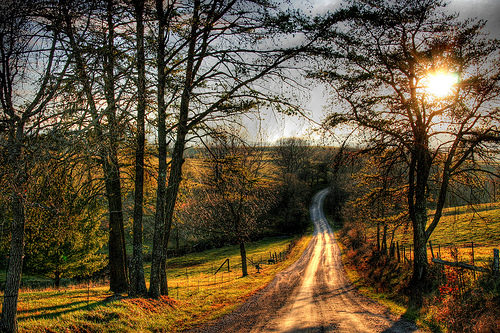
Off the main highway we wended through the countryside on familiar gravel roads. Every mile was a treasury of memories and stories to tell. Up Sadie’s Hill which was always such an adventure in the winter, past the Burger’s place and around the last bend before the farm would come into view.
The pond seemed so much smaller than I remembered. The raspberry patch behind the house was gone. My favorite tire swing was missing from the big oak across the lane from the house. Some of the outbuildings had given way to the years. The farm was not as I remembered it. But one thing caused me to catch my breath in surprise.
At Christmas time we would always crowd toward the window of the car as we took the last turn in the road. The farm lay in the valley below and we would and strain to see the lights on the little evergreen beside the spring run. One Thanksgiving I remember helping Grandpa decorate the tree with a six-foot stepladder.
The tree was still there, but it towered over the old two-story farmhouse. The little pine by the spring run was now over forty feet high!
The next time the family was together, I told Grandma about how the tree had grown. Dad laughed and assuming a Paul Harvey-like voice said; “How would you like me to tell you the rest of the story?”
Years ago Dad and his younger brother Bill skipped school on the opening day of rabbit season to hunt with Grandpa. Grandpa gave his approval on the condition that the boys would not lie when asked the reason for their absence. They took the deal and skipped school to hunt rabbits with their dad. Evening came quickly and after a nice dinner with fresh meat the boys tumbled into bed, but they would face the judgement at school the next day.
They weren’t alone. The boys were called upon to account for their absence the following day. They joined a long line of boys at the Principal’s office. Most of the other boys claimed there were sick. (They were sick of having to go to school on opening day of rabbit season). Dad and Bill, true to their word, told the truth. “we were rabbit hunting with our dad,” they said. “Are you sure you weren’t feeling just a little under the weather, boys?” the Principal asked. “No, sir, we were feeling fine, and we were rabbit hunting with our dad.”
The gavel dropped and the sentence came swiftly. They would stay after school one hour each night until they had made up the time they had missed.
On the final day of Dad’s punishment the teacher, out of sympathy, walked back the aisle where dad was sitting and gave him a little gift. It was tiny start of a pine tree in a cut-off milk carton. It didn’t seem like much of a compensation for the suffering he endured, but he carried it home. That night Grandpa and Dad set it out in the back yard of their home on Bowers Avenue in Newark, Ohio.
A few years later Dad was serving in the Navy in Korea, Bill and Aunt Ann were married and gone. My grandfather realized a life-long dream. He and grandma were able to buy a small farm north of town. Nestled in the hills were he had grown up. Along with their other belongings, Grandpa took the time to dig up a little pine tree and set it out at the base of the hill by the spring run.
It’s always been a source of beauty. It’s a haven for birds. In the winter its branches are flocked with snow and glow with multi-colored lights. It’s fed year round by the spring at its feet. But I know that it is more than that. It is a forty foot tall monument to the virtue of truthfulness.
Someday, I’m going back to Ohio. I’m going to turn off State Route 13 at St. Louisville and wind my way on gravel roads back to the east. I’m going to go back up Sadies’ Hill. I’m going to remember the time grandpa had to get the old Massey-Ferguson tractor and come and pull our car up the icy hill to get us to the farm for Christmas. I’m going to visit the new owners of the old farm and I’m going to tell them what a treasure they have growing in their front yard.
“The truthful lip shall be established forever, but a lying tongue is but for a moment.” (Proverbs 12:19 NKJV)
A Surprise in the Driveway told by Ken Pierpont

When I was small, before my Grandfather Pierpont had retired from Owens Corning Fiberglass in Newark, we visited the farm one weekend. It was in those first few warm and wonderful days of summer. We suburban kids longed so deeply to feel the grass between our toes. We longed for the touch of the evening breeze on our face, the sun on our heads, the scent of things that grow. We longed for a ride on the tractor-for a evening with our cane poles on the edge of the quiet pond as the summer evening set in and the sound of the crickets crecendoed with the waning light.
When we arrived Grandpa announced that he had a surprise for us. It was in the lane. We would have to search. We all scurried to see what it was. The factory had discarded dozens of large green balls that looked like dark green glass marbles a little darker in color than telephone insulator glass, but similar. Each round class ball had a certain imperfection in it. Grandpa had spread them in the drive and told us if we found them we could have them. We gathered them like greedily little pirates.
Back home marbles this size were called “boulders” and we discovered to our delight that they were coveted by the neighbor kids. I had a large supply of them at one time so a swapped them for “stealeys” and for other “boulders,” and sometimes for baseball cards.
Grandma and Grandpa survived the depression, but not without hunger and not without hardship and not without watching my great grandfather lose my Grandfather’s childhood home–a pleasant farm whose house crowned a hill looking out over hills and valleys of pasture and field. It was on the main road through Chatham just north of town so we often reversed the sad story. I think it must have been a part of who my grandparents were.
Grandma and Grandpa were serious about their work. They were diligent about their savings. They were conscientious about the smallest expenditure. They didn’t waste things. They didn’t throw away things that were used. They salvaged and found multiple uses for things. They saved things others threw away. They saw value in things others had no use for. Grandpa immediately saw value in the unique green glass balls.
That was years ago. The farm is no longer in family. The place is still there but almost nothing survives now that I remember from my youth except for the great Spruce still standing on the bank of the spring run. You could sift every stone in the lane that winds down from the road over the creek to the house and you would find nothing but white native limestone gravel. I’m sure over the years we mined every green glass ball from that lane. I would very much love to have one of those marbles today. A stranger would never understand their value, but if you were to show one to my bothers or my sister I’m sure it would start a bidding war.
What if we had the ability to see today the value something would have once the years have past? What if we could see ahead and know how worthless somethings are that preoccupy us and worry us now? Wouldn’t it be good to be able to see things that way.
God help me see the value of things the way you see it–through the lens of Your perfect eternal evaluation. When time is no more what will I value, what will I cherish? What among the things that I worry about here will lose it’s value when time is no more? Are you sure what you are worrying about right now is worth worrying about? Are you sure the things you squander now won’t have value one day?
A wise teacher once told me: “Wisdom is seeing life from God’s point-of-view, and God’s will is exactly what you would choose if you knew the future.” (Bill Gothard)
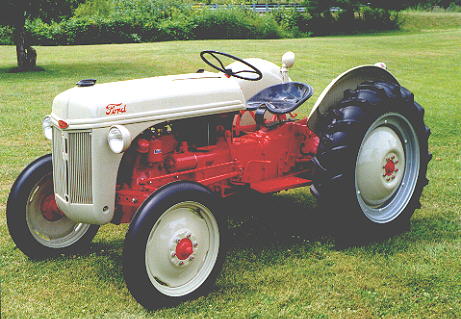
I never see one of these without thinking of the Farm. Grandpa had an old Ford-Ferguson and, for the last few years, a nice 8N or 9N very, very much like the one in this picture. He was proud of it and always wanted to have implements for it. He wanted a front-end loader, but never got one.
Among other things, this summer, I’m working hard on polishing up my manuscript for a book I have been calling Licking County Farm. It is a collection of stories about family faith and heritage based on the farm my grandfather and grandmother Pierpont owned from a few years before I was born to about the time I went away to college–just a season–just a “few days”… but what a memory it is. I have stories to tell.
Keep your eye on this site and I will let you know how you can get a copy of Licking County Farm or For a Few Days; Stories of Faith and Heritage From a Small Farm.
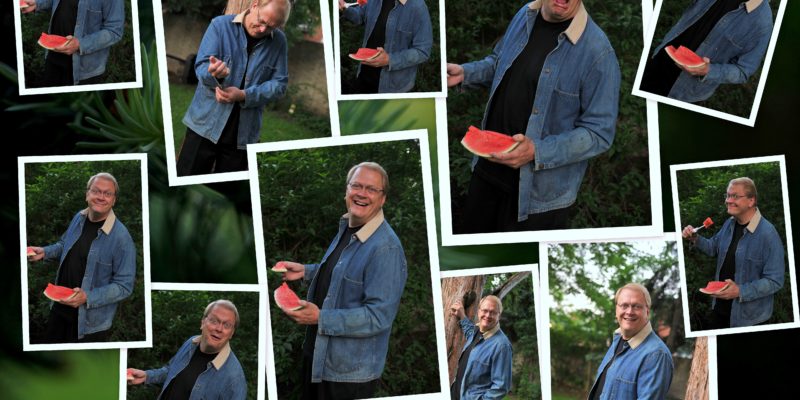
Lately I have been wearing a “costume” sometimes when I tell stories of my grandfather Pierpont’s farm. I’m working on publishing a collection of these stories soon. It may be an eBook. Grandpa, who died in October of 1980 would never have believed the stories of his humble farm would be told all over the country and published “electronically.”



Recent Comments