10:00 PM
Ken Pierpont
Series: Together at the Foot of the Cross; Part 2 of 4


/
RSS Feed
Bittersweet Farm
10:00 PM
Ken Pierpont
Series: Together at the Foot of the Cross; Part 2 of 4
03:00 PM
Ken Pierpont
Series: Together at the Foot of the Cross; Part 1 of 4
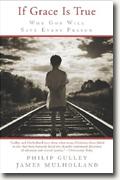
Here are some thoughts I have written after reading “If Grace is True” and “If God is Love” by Philip Gulley and James Mulholland.
I think Phillip Gulley has a kind heart and a clouded mind. Philip Gulley is a nice guy with a great sense of humor who has written some wonderful books-but he stopped. He didn’t stop writing well and he didn’t stop getting books published. While the quality of his writing as continued, perhaps even improved, his theology has become corrupted in dangerous ways.
He has become of victim of his own affable spirit. Apparently he has been unable to reconcile in his mind and in his theological construct the clear statements of the Bible about eternal judgment. He still quotes the Bible and has a degree of reverence and respect for it but he has openly denied its factual reliability. He denies the reality of hell though he still cherishes hopes of heaven for all. He doubts the deity of Jesus and the effect of his death though he still has regard for the ethic that Jesus embodies to him.
This is a simple denial of sound, orthodox understanding of the Bible message. It is a departure or denial of historic Christianity. He has embraced universalism. His theology is expressed in a readable and anecdotal style but it is a serious and subtle attack on sound thinking about the message of salvation. If Philip Gulley is wrong, there is a great deal to be lost in embracing his views, as warm and compelling as they are. They are a restatement of some of the basic ideas of classical theological liberalism. This is interesting because classical liberalism is now a bit anachronistic as it has been displaced by post-modernism and syncretism and, they tell me that even as I am just beginning to get a grip on post-modernism it is going out of fashion.
Trusted people who know about these things are saying that on the buffet of ideas post-modernism is being whisked away and it is being replaced by other entrees for our metaphysical taste buds. Food poisoning is still deadly, even when it when it disguises itself with fancy intellectual-sounding names.
Ideas are even more deadly when they disguise themselves in the homespuns of warm middle-American virtue. That’s what Philip Gulley has done.
There are two big problems with Mr. Gulley’s lastest writings you can see one by looking back and the other by looking forward. If you look back you will see this is not the historic Christian faith. If you dare to look forward you will see that the fruit of this belief will not produce holy-living or genuine love Mr. Gulley wants to foster.
Denying depravity will not insulate us from its effects. Classical liberalism has lowered the standards of holiness and morality and ethics but it is powerless to produce the miracle of a new heart and a new life in people. And it is powerless to deliver people from judgment of which Jesus frequently warned people. How can we justify taking from the pages of the Bible only the things that warm our hearts and rejecting things that warn us of danger. How can we revere only a part of the Bible and reject another part? How can we be devout cynics?
Have you seen the Nooma videos? They are hip, but are they helpful? They are cool, but are they correct? They are trendy, but are they true?
Shepherds at heart are always on the alert for danger and there is nothing as dangerous as spiritual danger. The virgin birth matters. The authority of Scripture matters. A right understanding of the atonement matters. A clear undersatnding and presentation of the Gospel matters. Truth matters. Truth must trump style. For those of you who have an interest in truth and discernment here are some thoughtful reviews.
I thought this post on a Rob Bell event was noteworthy too.
If you like audio, here is an interesting interview by a couple discerning men. John MacArthur’s comments about his book Truth War is about a third of the way into the program.
 In 1978 I was twenty years old. Shortly after Thanksgiving that year I was travelling across Texas with a singing group from my college. One evening I was enjoying the hospitality of a church family, watching the movie, Orka, the Killer Whale, when I was overcome with pain in my abdomen. They took me to Spring Branch Memorial Hospital in Houston. The Hispanic doctor asked; “Have you had Mexican food this evening?
“Yes, quite a bit,” I said.
“Have you ever had Mexican food before?”
“No, this is the first time.”
“Well I’m afraid you’re a Gringo who just can’t handle his Mexican food.” He gave me a strong antacid and sent me home. I tried to sleep but things just got worse. Finally I could take the pain no more. I returned to the hospital.
After many painful hours of observation they finally decided that I had acute appendicitis and prepared me for surgery. Once they were sure it was appendicitis they gave me a shot of something very strong that seemed to make all my troubles go away immediately. In no time I was feeling fine and preparing to fly back to Springfield, Missouri – without my appendix – to be comforted by my then-girlfriend, Lois.
What if the doctor in Houston, when he discovered that I had appendicitis, had not wanted to frighten me with bad news? What if he just said gave me a shot for pain and sent me home? An inflamed appendix can burst and lead to a painful, poisonous death. A strong narcotic for pain would have masked the symptoms and cost me my life.
Sometimes the very best news you can give someone is bad news.
It’s popular to stage happy, positive, entertaining church services that make people feel good these days. I like to think of myself as a positive person. I like to see people happy too, but if something deadly is happening, it’s the truth that might save their life, even if the truth is bad news. Sometimes the best news is bad news.
Recently I have been studying the book of the Bible that explains the Gospel (the word Gospel means “good news”) in the clearest terms. It is the New Testament book of Romans. The first section of the Good News book of Romans is the bad news that all of humanity has a terminal illness called sin. It’s a little like the doctor telling you that you have a deadly disease. The rest of the book tells you how to be delivered from the deadly disease. Until the bad news really dawns on you the good news really doesn’t make sense.
Ken Pierpont
Granville Cottage
Riverview, Michigan
February 11, 2008
Recent Comments