Take a look at Holly’s post about the weekend of ministry. I think you will like it.
Dolly and Skippy
Two dogs lived on Grandpa’s farm, Dolly and Skippy. Skippy was colored like a Beagle but he had long legs and was about the size of a Golden Retriever. He was a sturdy, affable farm-dog. He lay on the porch when Grandpa was home. He followed him to the field when he was farming. When he was gone he ran rabbits and killed ground hogs. He was patient with children and he knew when to stay out of Dolly’s way.
Dolly’s name did not adequately describe her rugged character. On winter nights she would contentedly burrow down into a snow bank and “drift” off to sleep. In the morning grandpa would step out on the back porch and whistle. She would rise from her sleep, shake the snow off her coat and bound for the house.
Grandpa had a fanciful imagination and he had read all the Jack London stories. Maybe that’s why he told me that he was pretty sure she was part wolf. I believed him for a last three reasons; I was young and vulnerable, I admired my grandfather and he knew how to “put a story over,” and even a kid could tell Dolly had a wild side. She could have been a character in a Jack London story herself.
Those dogs were never in the house they didn’t have a pedigree, but they were well-fed, they were loved, and they served a purpose on the farm. They managed the ground hog population. They announced the arrival of guests and warned unwanted intruders. They added life to the place. They lived simple and happy and they both died in a contented old age right there on the modest farm where they lived their lives.
They never did a dog-show, pulled a dog-sled, or attended obedience school. They were never house-broke, they didn’t have invisible fence, they didn’t wear sweaters. They were never penned up or chained and neither of them ever wore a lead. Even without formal training they had common dog-sense. If Grandpa and Grandma left for a weekend visit or vacation they didn’t hire a kennel. Skippy and Dolly just kept and eye on things and looked after themselves. They were just garden-variety, farm dogs.
Sometimes we can just cherish a “too-high” opinion of ourselves and while we are yearning for stardom, success, fame, fortune, promotion, and notoriety we are wasting our precious life and squandering the simple joys all around us every day. I don’t know about you but I imagine myself as a “farm dog” kind of guy.
I don’t mind staying around home. I’m happy with plain food and a simple life. I like it when people take me with them on a walk but I don’t mind hanging out on the porch or curling up by the fire. I’m just a little suspicious of strangers who don’t smile or maybe smile too much. Fancy people are interesting but I think people like plain folk better. Plain like Skippy and Dolly who scouted the hills of my grandpa’s farm when I was a boy growing up.
Live in harmony with one another. Do not be haughty, but associate with the lowly. Never be conceited.
(Rom 12:16 ESV)
Kenneth L. Pierpont
Brook Place
Hinsdale, Illinois
November 15, 2006
Daniel Pierpont
 Daniel was born fifteen years ago tonight in Knox County, Ohio. At the very hour of his birth the sky glowed with a rare occurance of the Northern Lights.
This evening we celebrated by watching a new version of “Where the Red Fern Grows.” It is a beautiful movie and above reproach. The movie is an especially good movie to encourage character in young men.
Is This That?
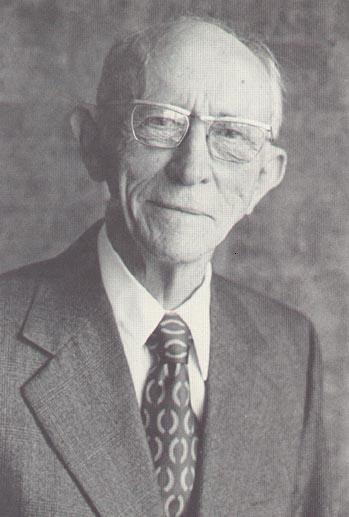
All that calls itself Christian is not. All that calls itself “Evangelical” is not the evangelical of history. Follow this link to a powerful, thought-provoking message by the late Vance Havner. The message was called; “Is This That?”
Among my treasured posessions is a near complete collection of the writing of Vance Havner. Years ago I stumbled across his books and they have inspired me to write.


/
RSS Feed
Chronological Snobbery
I’ve been thinking about what C. S. Lewis called “Chronological Snobbery.” Chronological Snobbery is the arrogance of measuring every age against our own age. It is the foolish short-sightedness of thinking we are living in the best days of the church. The folly of chronological snobbery is erecting a false standard of Christian vitality and holiness and measuring ourselves against it. We are willing to settle for a thin-soup, weak-tea version of the Christian faith that is not vital enough to triumph over sin and the flesh. The breath of God is not on it. It may entertain or arouse the shallow curiosity of many with its style and but it does not result in holy living and holy dying.
We have aggressive distribution, clever marketing, professional entertainment, moving music, impressive buildings, radio networks, charismatic personalities, and celebrity endorsements. None of these are a substitute for the miraculous power of the Holy Spirit that can radically transform a sinner into a saint of God.
I once heard it said the revival is when the world moves toward the church and apostasy is when the church moves toward the world. Either way the world is in the church. In revival there is holiness in the pulpit and in the pew. In apostasy there is holiness neither in pulpit or the pew.
Our most popular books and preachers cast doubt on the great historic verities of the Christian faith and use the language of the bar room and the pool hall. When my grandfather got saved he was immediately set free from habits that harmed his body. He gave up his old way of talking. He had a new hunger to see other people’s lives changed.
Compare some of the most popular evangelical books with books like, “Hudson Taylor’s Spiritual Secret.” Think about the contemporary pulpit. It is often a place for pop-psychology, comedy routines, and motivational talks with bible verses added. Now– “Google” Spurgeon and just compare. Where is the appeal to the conscience of the sinner? Where is the great proclamation of the glory of the gospel.
Should we be satisfied with religious “business as usual” and settle for a version of Christianity that has little power to free men and women from bondage to sin? Should we really franchise a version of the church that is not pulling a new generation upward to God? Should we endorse a Christianity that cannot produce an army of devoted young men and women who are willing to live above the world? Should we not weep and mourn and grieve that Christianity as we know it in our day is not cementing marriages in life-long love relationships? Should we be proud of the fact that our churches cannot produce strong, stable families?
Were are the men of God, whose hearts are pure and whose lives are honorable? Where are the women of God, holy women who have rejected the lure of the world and devoted themselves to making their homes holy places that forge within them the very character of the nation. Where are the young men who are pure in thought and deed, noble and filled with virtue and courage and holy vision? Where are the young women who are pure in heart and body and hungry for God? Where are the young women who have turned their back on the world and its foolishness and distanced themselves from its shallow, sensual, godlessness? Where are the young ladies like Amy Carmichel, Gladys Alward, Ann Judson, and Sarah Edwards?
May God deliver us from the foolishness of measuring our faith without taking into account what He is doing in other parts of the world and what He has done in other times.
Ken Pierpont
Brook Place
Hinsdale, Illinois
November 6, 2006
Peace in the Face of Death
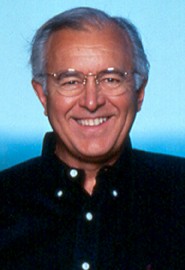
This fall I was asked to speak at a retreat in the beautiful Northwoods. Among the guests at the retreat was a well-known Christian author, Gary Smalley. I was thrilled to be able to speak to him personally for the first time. His book, The Key to Your Child’s Heart, as been a favorite of mine for over twenty years. Over and over again I have thought of the message of that book when I was tempted to me irritable or short or angry with the children. It was a happy experience for me to be able to shake his hand and tell him how much his book had been a help to our family.
One afternoon Gary was persuaded to treat us with a talk. Gary’s talk was about the heart. He began by telling of his near-death experience while on a hunting trip. He had a serious heart attack and thought he would die before he was able to get out for medical attention. He said that he had a perfect calm in his soul about going to be with the Lord. Gary has a wonderful sense of humor. When he thought he was dying he said;
“Lying there on the ground I really thought I was going to die. I just looked up into the sky and said; ‘see you in a minute, Lord.'”
Obviously, Gary lived to tell about it. My hope for each of you who read this is that you would have the confidence of David who said; “Yea, though I walk through the valley of the shadow of death, I will fear no evil, for thou art with me.”
Recent Comments