

Empty Pews
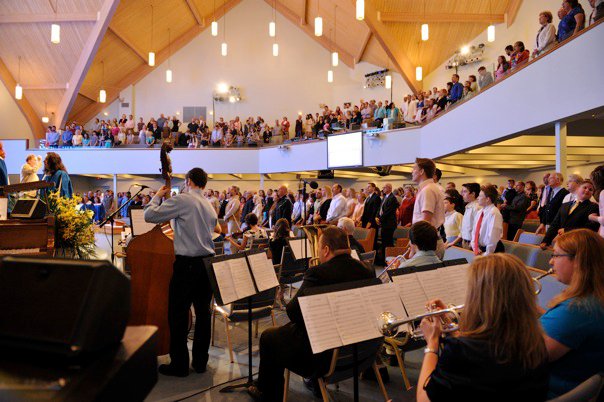
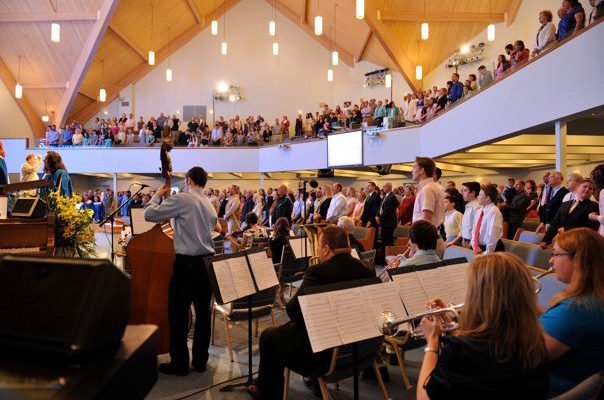
The picture above was taken on Easter Sunday the year we set the all-time attendance record for Evangel. Every Sunday hundreds of people worship at Evangel but on all other Sundays except Christmas we have more empty pews then what you see in this picture.
An Epiphany
A few weeks ago I had an epiphany-an enlightenment. It was on a Sunday morning right after eleven a.m. As the morning service started I realized I needed a drink of water. I walked back to the church offices and got a bottle of water from the little fridge in the workroom. When I walked back into the auditorium I stood for a few minutes and listened to the congregation sing. I scanned the crowd that morning and the stories of the people who gathered there began to leap one-by-one into my heart. Suddenly I was aware that there were so many people there–so many stories gathered in one room hundreds of them. In a few minutes I would climb the steps to the platform and it would be my responsibility to point them Godward.
I preached that morning with a special unction. There were so many people there. There were so many stories. There were so many hungry hearts. There were so many needs and hopes and dreams represented by the people gathered there in the pews. I have preached here every week for almost ten years now. You see a lot of living in ten years. People are dealing with grief and guilt, dreams and desires, pain and pleasure. And I am there to point them Godward. I am there to speak of things eternal. I am there to communicate Word of the Living God into their lives.
Most of the pews in the large auditorium were filled with people, but I have a weakness. I tend to notice the empty pews. I think of who is not there. It is a subtle form of idolatry to measure my effectiveness, to weigh my worth, even to gage my spiritual health by the number of people who attend on Sunday morning. It’s wrong and I know it is wrong, but it is a subtile and persistent temptation. I notice the empty pews.
That morning I believe God opened my eyes to the great opportunity and responsibility before me represented by the pews that were occupied. I saw it clearly and it was a meaningful insight. It was as if it came to my heart from the Lord this way; “On Sunday morning don’t think about empty pews. Concentrate on the people who are there, and don’t think about the people who are not there. On Sunday think about the full pews. All next week you can go seek out the people who should have been in the empty pews, but not on Sunday. On Sunday focus on the people who are present.”
On Sunday concentrate on the full pews. During the week think about the empty pews.
Ken Pierpont
Granville Cottage
Riverview, Michigan
July 7, 2016

Lookin Good

Here is a re-post of an article I wrote ten years ago when I was trying to deal with the damage fall-out of an organization that, in a sincere desire to stimulate holiness of life in young people and families, added to the Scripture and emphasized compliance, conformity, control and external appearance. I did some deep thinking, soul-searching and Scriptural study and wrote this: (January 23, 2016)
My wife is a photographer and her most beautiful pictures are of our children. Most of them are posed, of course, even the candid ones are usually really posed, too. After all we want to look good. Can hear little Hopey’s voice calling to me now in my memory, “How do I look, Daddy?”
Do your children look like good Christians? That’s a good question, don’t you think? I suppose I think about that a lot. I like to think of it as “our testimony.” I want my children to look nice and dress modestly. I want them to wear things that show that they are not enslaved to the false philosophies of the world around them. I like to think that I feel this way because I want to have “a good testimony.” But I have to admit that sometimes I think I want my children to look good so that I will look good. Maybe there are times that it is more about my reputation than it is about their good or their “testimony” for God.
What’s the Question?
I’m not going to stop asking the question; “Do my children look good,” but I think there is a much better question to ask; “Are my children right with God in the deepest part of their hearts?” “Does my son love God and desire to worship him?” “Is my daughter in love with Jesus in the deepest part of her affections?” “Are my children getting a vision for the world based on the work of God within them?”
Which question is more important? This is not something we can afford to “miss” on. Satan would love to confuse your sons and daughters on this one. It is one of his most common strategies. Iniquity and willfulness abound. A new approach or a new movement will appear very effective for a couple decades while all the children are little and it is easy to “dress them up” and “line them up.” But in a few years that will be hard to keep them looking good and then our outward organization or demands will yield to their own private thoughts and opinions. They will follow the dictates of their hearts. They will begin to do what THEY believe.
Looking Good – for Now
You can force outward compliance for a few years, but there will come a day when your sons and daughters will act and talk and dress in a way that reflects their heart. They may go on wearing a disguise covering a heart that is not really taken with God and full of holy love for him. They may change from wearing what you expect them to wear to wearing what others expect them to wear but what good will that do if their hearts are still not filled with affection for God? Isn’t it even more dangerous for a person to look right on the outside when they are not right on the inside. Didn’t Jesus use some of his most direct language on those who emphasized outward appearance while within they were filled with things that were corrupt? (Read Matthew 23:5, 25 etc.) Jesus warned his disciples not to live to “be seen of men.” (Matthew 6:5)
Wouldn’t it be a great tragedy for our children to learn how to conform outwardly to expectations around them but have a heart that is empty of spiritual vitality? What if the learn to “play the game” and it really is nothing more than a game. What if we are not showing them how to live and love God and the world for God’s sake but we are just giving them a costume and a mask and we are just “teaching them how to act” instead of showing them how to really live. So even if they look good that doesn’t mean they are good. We could just be creating a more resistant breed of Pharisee. That would be a tragedy, even if we do look good.
The Heart of the Matter
Here are some things to keep in mind. We should instruct their hearts in moral purity and we should instruct their hearts in selfless ministry. We should instruct them and warn them to “keep themselves unspotted from the world,” and to walk circumspectly (carefully) in this world. These are the heart matters that will drive their lives and effect their appearance, too.
In other words, when we see faddish dress, immodest dress, worldly dress, over-emphasis on costly things, or careless dress or appearance that communicates identification and agreement with philosophies that are antithetical to our faith and the truth of God, we need to get beneath the surface to heart issues. We need to treat the root causes of these things. It is not enough to treat the symptoms of the disease. It is not enough to manipulate outward compliance. It is not enough to “control” behavior and outward appearance. There is a deeper and more important and more difficult and more time-consuming work that has to be done.
This will require time and relationship and patient teaching and consistent example. Most of us would rather just bark some orders and get back to what we were doing. Is it possible that the outward things that we see that we do not like are reminders that we need to strengthen the relationship, and deepen the teaching, and change the schedule, and examine our own lives, and make some changes so that we can get to the issues of the heart?
Our Ultimate Goal Requires Something More than Outward Compliance
If your son starts combing his hair in a way that displeases you and you ask him to change it and he resists you, what should you do? You can yell louder, lecture, and badger him until he yields to your wishes. You can beg him and manipulate him emotionally into compliance. You can force compliance by threatening to withhold food and shelter – That sounds extreme but that is what is implied when we say, “As long as your feet are under MY table, you will do as you are told.” And I agree, that is only reasonable. They should honor you and obey you, but don’t you want your influence to endure beyond the time when their feet are “under your table.” Isn’t it our goal that the truth of God will ring beautifully in their ears long after they have established their own homes. Aren’t we committed to a multi-generational vision that will require them to teach these same things to their own children from their hearts. Do we really expect our pressure tactics and manipulation to reach across generations and influence descendants that we will never meet until they join us in heaven?
We are not just passing down traditions here. We are bequeathing spiritual life from one generation to another. We are showing our children what it looks like to be in love with Jesus. We are imparting to them a vision for the world and for the Kingdom of God so that they will go and make disciples. This is a much bigger thing than outward compliance to a sectarian standard, this is about heart-fellowship with the Living God. This is passion for eternal things. This is a sense of mission and a vision for the world. This is not about lining our family up for pictures that look like they were taken in the early 50’s. This is not about us looking good and calling it “our testimony.” Our children will get old enough to see through that. This is about the real condition of the inner heart.
God help us raise sons and daughters and influence generations that really know and love You, not just good “posers.” God help us to have sons and daughters whose very heart of hearts are reflected in our most beautiful family photos. May their modest clothing reflect pure hearts and pure lives. May their beautiful smiles grow out of joyful hearts. May the light in their eyes come from conscience void of offence toward God and man. May their choice of clothing demonstrate selfless deference for the sake of missionary endeavor and disciple-making. God make us people who really love you deep down inside and give us sons and daughters-even generations who love you, too. Help us not to manipulate outward compliance and then deceive ourselves into believing that’s what holiness looks like.
“Take heed that ye do not your alms before men, to be seen of men, otherwise you have not reward of your Father who is in heaven.” (Matthew 6:1)
“They loved the praise of men more than the praise of God.” (John 12:43)
“How can ye believe, which receive honour one of another, and seek not the honour that [cometh] from God only?” (John 5:44)
“And he said unto them, Ye are they which justify yourselves before men; but God knoweth your hearts: for that which is highly esteemed among men is abomination in the sight of God.” (Luke 16:15)
“Whose adorning let it not be that outward [adorning] of plaiting the hair, and of wearing of gold, or of putting on of apparel; But [let it be] the hidden man of the heart, in that which is not corruptible, [even the ornament] of a meek and quiet spirit, which is in the sight of God of great price.” (1 Peter 3:3-4)
We are not commending ourselves to you again but giving you cause to boast about us, so that you may be able to answer those who boast about outward appearance and not about what is in the heart. (2Co 5:12)
Ken Pierpont
Brook Place
Hinsdale, Illinois
August 21, 2006

Lessons on the Porch (Part Three)

Sunday night August 10 God spoke to my heart in a very clear way out on the porch after a long Lord’s Day of ministry. He challenged me to devote myself to prayer in the same way I have devoted myself to the ministry of the Word. The next morning God arranged an experience for me at the hospital early in the morning to challenge me to pray for every member and every regular attender of Evangel every week. He was not done.
Tuesday morning I got up and went for a walk around the pond. Hazard (our Yorkie) loves to walk and we have a great neighborhood for walking. Just north of our home is a park that is situated around a pond. I try to walk around the pond regularly. On this morning the lessons about prayer God was teaching me were fresh in my heart. Devote yourself to prayer in the same way you have devoted yourself to the ministry of the Word. Pray for every member and every regular attender at least every week.
On my walk I listened to a message by Pastor Francis Chan. In the message he was talking about a network of house church pastors he leads. He said something that shocked me. It went something like this: “I don’t care if the pastors are great preachers. What I want to know is this; Do they get down on their knees and pray for the people by name every week. Isn’t that the pastor you want. If you are not going to do that for your church I don’t want you to be one of our pastors.”
Immediately I know that God was speaking to my very own soul. I went home and watched a video version of the message. I asked our son Kyle to create a video clip from the message to share with the people and to remind me. Now there were three parts to what God was showing me:
1. Devote yourself to prayer in the same way you have devoted yourself to the ministry of the Word.
2. Pray for every member and every attender of Evangel every week.
3. Make prayer for the people a priority. If you don’t pray for people you aren’t really their pastor.
It was unmistakable. God was using a series of circumstances and reminders to guide me to a biblical truth that would transform my pastoral ministry. I was grieved because it was so simple and because it took me so long to see it.
I have always prayed for the people, but I moved through the membership slowly. I didn’t pray for every person every week. I didn’t devote myself to it. I didn’t carefully add people to the list who consider Evangel their home and me their pastor who had not yet formally joined. I knew I would have to make some changes. I wasn’t sure how.
I heard of a pastor in Oregon who had experienced a ministry revolution after years of frustration and three church splits. What he discovered about prayer transformed his life and his church. The church grew to over a thousand and became strong and unified. I had a remarkable conversation with him. I will tell what I learned from him in my next post. (Until then you can watch a clip of the message by Francis Chan below).
Ken Pierpont
Granville Cottage
Riverview, Michigan
November 13, 2015

I Don’t Care What You Think

I’ll tell you what I think…
Let me tell you how I feel…
It seems to me…
I was once taught that good decisions require good information. Intuition, emotions, feelings, opinions, even human logic are not an adequate basis for good decisions. When we are making vital life-altering decisions we need good information. We need truth. The Word of God is truth. When you need to make a good decision, see what God has to say about it. What does the Bible say and where does it say it?
1. Don’t base your decisions on how you feel–your emotions.
2. Don’t base your decisions on what you think–your logic.
3. Don’t base your decisions on texts of the Bible that are not addressing the issue you are discussing.
4. Base your decisions on a careful, thoughtful understanding of the right texts of Scripture. The first question to ask when wrestling-through any issue or Biblical question is: “What are the key passages of Scripture that clearly address this issue or question?” After we have discovered those texts then we need to go to work to see to it that we have handled those passages accurately. This is hermeneutics… the art and science of interpreting texts.
When you are discussing a Biblical issue listen to yourself. Are you continually saying “I think” or “I feel” or “It seems to me”? These phrases indicate that you are not building your views on a firm, biblical foundation. It really is not important what I think or how I feel. What is paramount is “What has God said?”
Can I be blunt? I don’t care how you feel or what you think…
And you shouldn’t care what I think…
You need to know what God has said.
Ken Pierpont
Granville Cottage
Riverview, Michigan
November 2, 2015
Boring Sermons?
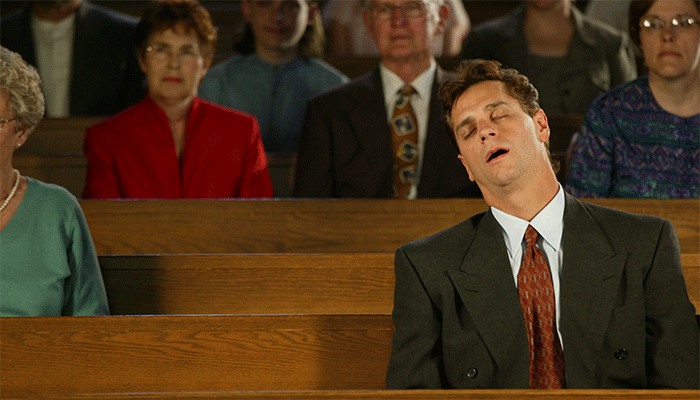
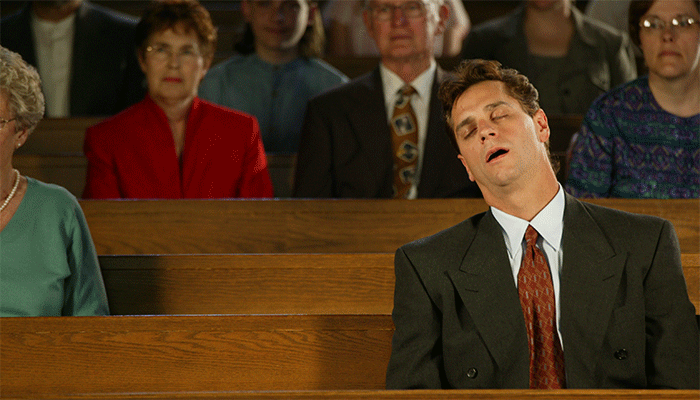
The Problem of Boring Sermons. Let’s be honest… On Sunday morning it’s easy to let your mind drift or get mentally lost when the pastor is preaching. I have preached every Sunday morning and most Sunday nights and Wednesday nights for the last 36 years and hundreds of times in-between. I know what I’m talking about. I can usually tell when someone’s mind is wandering off to the lunch menu or their fantasy football team. I do my best to capture and hold the attention of people, but it helps a lot if both the the guy in the pulpit and the folk in the pew are working at it.
Questions. Here is a good way to make the message more interesting, if your pastor announces his text ahead of time. This works well when your pastor is preaching through a book of the Bible so you can anticipate what portion of Scripture he is going to preach from. Read the passage ahead of time starting early in the week so the passage is on your mind and in your heart all week. Read or listen to the passage from a few different translations and paraphrases. Now here is the key thing to make the messages more interesting. Write down any questions that come to your mind. Pepper the text of scripture with questions. Who, what, where, when, and why. It’s also helpful to ask “So what?” Here are three more great questions to ask…. (These are questions you can ask in your heart while the pastor is preaching) What does the text say? What does that mean? What does that mean to me? When you answer these three questions you are observing, interpreting, and applying Scripture.
What does it say: Observation.
What does it mean: Interpretation.
What does it mean to me: Application.
By all means if you ask questions of the text the message will be more interesting because as the pastor preaches he will be answering the questions you have been carrying in your heart all week. If you want the sermon to be more interesting read the Scripture ahead of time and ask questions of the text.
Don’t Belch and Walk Away. Early this morning I had a hospital visit. It was dark when I pulled into my parking place at the church. I thought about supper last night. Lois had made a delicious beef stew and had it ready for me when I finally got home after a late meeting. I took a minute to send her a text to let her know how much I appreciated the meal and the cozy atmosphere she always creates in our home. Don’t forget to pray for your pastor and encourage him by interacting in a positive way about his preaching. He spends many hours a week in preparation. It’s good to know that you just don’t eat, belch, and walk away without gratefulness or thought.
Additional Tip: Get a good study Bible. I recommend the John MacArthur Study Bible or the ESV Study Bible. These will help you think more deeply about the text. Every week when I begin to study my text I am tempted to believe that the passage is not interesting or applicable to my life. The more I dig the more fascinating and relevant it is. The more I study, the more I see how all the pieces fit together into a single picture.
Pastor Ken Pierpont
Evangel Baptist Church-Taylor, Michigan
October 29, 2015
Recent Comments